Finance · Euroglobal New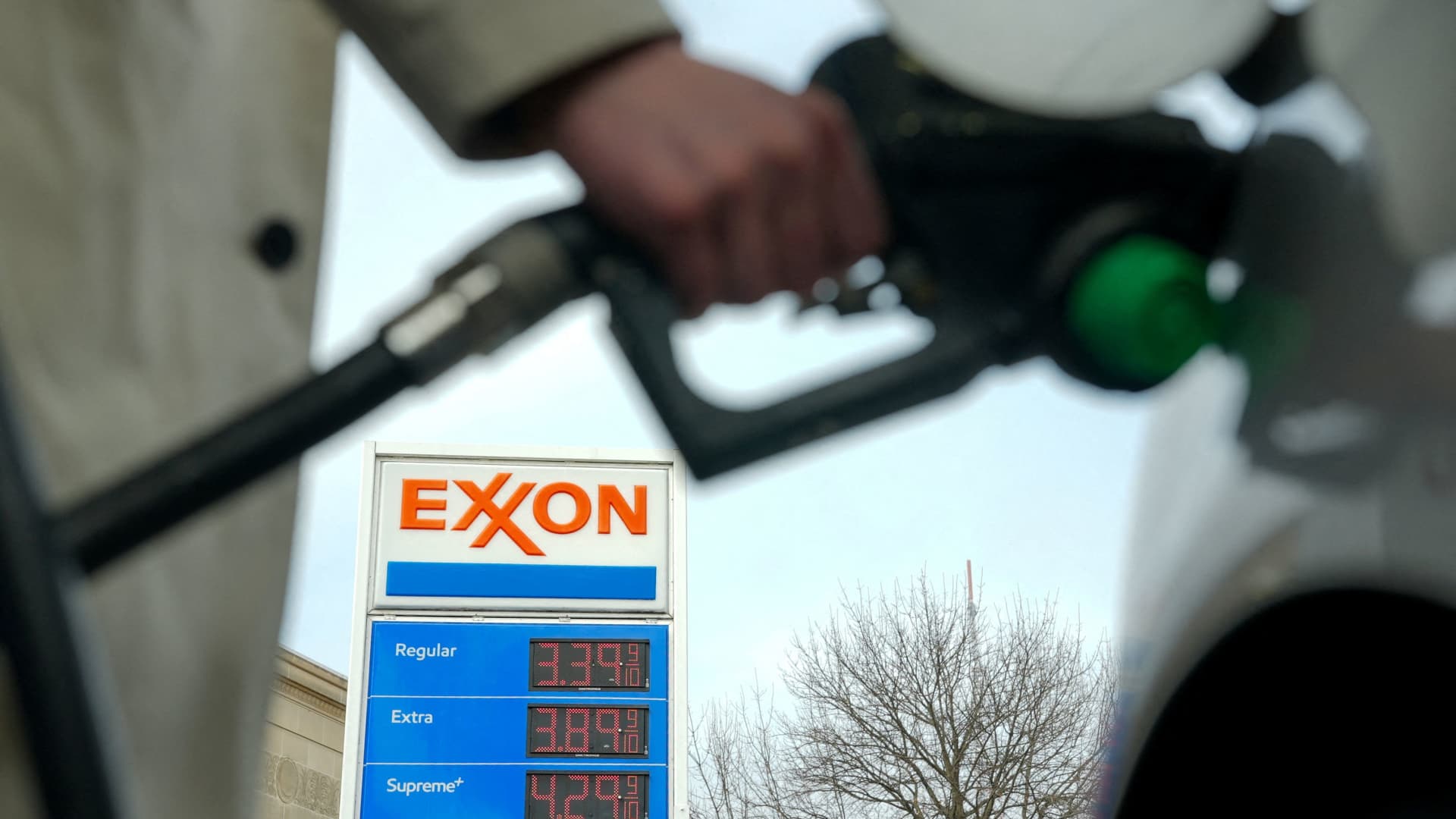
A man pumps gas at an Exxon station as the price of oil and gas has surged amid the U.S.-Israeli conflict with Iran, in Washington, D.C., U.S., March 5, 2026. Ken Cedeno | Reuters Consumers are facing a double-whammy of jumping oil prices and Treasury yields amid the U.S. war with Iran that is leaving them increasingly cash-strapped. Crude prices reaccelerated in recent weeks as fighting between the U.S. and Iran has ramped back up, a development that will lead to higher prices at the pump.
On top of that, the 10-year Treasury yield jumped this week to its highest in 19 years, threatening to intensify affordability challenges for consumers as borrowing costs rise for items like homes and cars. "Consumers are under a lot of financial pressure," said Mark Zandi, chief economist at Moody's Analytics. The total bill per household since the U.S.-Iran conflict began is around $1,760, according to an analysis from Moody's Analytics as of Sept. 11.
Zandi said $930 — or more than half — of that total bill for households comes from higher costs for energy, a category that includes pressures from rising prices on items like gasoline, diesel and jet fuel. Cumulatively, Moody's found that U.S. consumers have spent more than $121 billion extra on energy since the war began. Another $425 of that $1,760 stems from higher interest rates since the war broke out.
The final $405 comes from higher military spending, which Zandi said consumers will foot the bill for through either national debt expansion or increased taxes. Pain at the pump U.S. crude oil prices topped $105 per barrel on Tuesday, its highest closing level since mid May. Tuesday's jump came despite Energy Secretary Chris Wright's assurance to CNBC that the closure of a Saudi Arabian pipeline would only last a few days.
The average gallon of gas in the U.S. exceeded $4.32 on Tuesday, up 6% month over month and 36% from a year ago, according to AAA . Labor Day travelers earlier this month faced their highest prices at the pump for the holiday on record. Per-gallon diesel prices hit all-time highs above $6 in recent days and were roughly 70% higher than the same day a year prior, per AAA.
Economists have warned that companies could pass on higher costs for diesel — the fuel type largely used by truckers to transport groceries and other goods — to consumers in the form of price hikes. Slightly over 29% of respondents to the University of Michigan' s closely followed consumer sentiment survey mentioned gas prices in September. That's up from around 12% and 6% readings in the same month of 2024 and 2025, respectively.
Deloitte found that a 20% gain in crude oil prices translates to an estimated increase in inflation of about three-tenths of a percentage point. But that excludes knock-on impacts to prices for airfare or food, for example, which can make the overall impact on price growth higher, the consultancy said in a May report. Airfare prices have been one of the fastest-accelerating categories tracked in the Bureau of Labor Statistics' consumer price index since the war broke out.
The price has jumped more than 23% in August from the same month a year before, per the latest data from the BLS released last week. Yield readthroughs The 10-year U.S. Treasury yield climbed to its highest level since 2007 on Tuesday.
The benchmark for consumer loans and corporate funding is roughly a full percentage point higher than where it sat a year ago. That surge is driven in large part by bond investors' concerns about the war's impact on inflation and the U.S. government's ability to cover its growing debt pile. Higher yields can pour cold water on consumers' ability and confidence to purchase big-ticket items.
Stock Chart IconStock chart icon U.S. 10-year Treasury yield, 1-year Michigan's consumer survey found 44% of respondents expect borrowing costs to rise in the next year as of July, up 10 percentage points compared with a year prior. Participants were also more likely to say it was a bad time to buy a car than one year earlier, with a growing share citing high interest rates and tight credit conditions as a reason for their negative views. The average rate on the 30-year fixed mortgage — which broadly tracks the 10-year yield — this month topped 7% for the first time in more than a year.
Mortgage rates have trended higher since the war broke out, following longer-term bond yields. Higher mortgage costs can exacerbate the housing affordability crisis sweeping over America. The Atlanta Federal Reserve's home ownership affordability index fell to lows rarely seen on record this summer.
"People experience higher interest rates much like they experience inflation," said Diane Swonk, chief economist at consulting firm KPMG. "It makes things less affordable." Higher borrowing costs for companies can catalyze a slowdown in hiring, said Nicole Bachaud, a labor economist at ZipRecruiter. A hesitation to grow payrolls makes it harder for Americans looking to enter the workforce or switch jobs, bolstering the widely accepted view that today's job market is in a "low hire, low fire" environment .
Rate hikes from the Federal Reserve could provide another reason for firms to not expand their headcounts, Bachaud said. CNBC's Fed Survey found the majority of respondents expect the Fed to raise rates at least twice in the next year. Fed funds futures are pricing in a more than 92% likelihood that the Fed lifts rates at Wednesday's meeting , which would be the first increase from the U.S. central bank in more than three years.
Increasing borrowing costs can push up what consumers owe on their credit lines. Total credit card debt in the U.S. rose to $1.26 trillion in the second quarter, sitting near a record high, according to the New York Fed . 'Something has got to give' Several economists have said that higher energy costs as a result of the war have more than erased boosts from loftier tax refunds as a result of President Donald Trump 's "big, beautiful bill." But they broadly note that lower-income consumers, who usually spend a larger percentage of income on energy, have felt pain at the pump more acutely. That has helped drive the "K"-shaped economy , a term used to describe the uneven economic recovery for different income classes since the pandemic.
Inflation across the board is once again rising faster than income is increasing as energy prices surge, government data from August shows. As a result, U.S. consumers are left with negative earnings growth, when adjusted for inflation, and less purchasing power. With returns exhausted and real wages receding, Luke Tilley, chief economist at M&T Bank and Wilmington Trust, said consumers are drawing on savings.
The personal savings rate in the U.S. in 2026 has fallen to levels rarely seen since the Global Financial Crisis. Eventually, Tilley said U.S. consumers may need to pull back on their spending, a worrisome outcome considering it accounts for the majority of the country's gross domestic product. The Bureau of Economic Analysis said consumer spending rose 0.2% in July, marking a modest slowdown from the prior month.
"It's reflecting the times," Tilley said. "Costs have gone up and income growth has gone down, so something has got to give."
Source: CNBC