Finance · Euroglobal New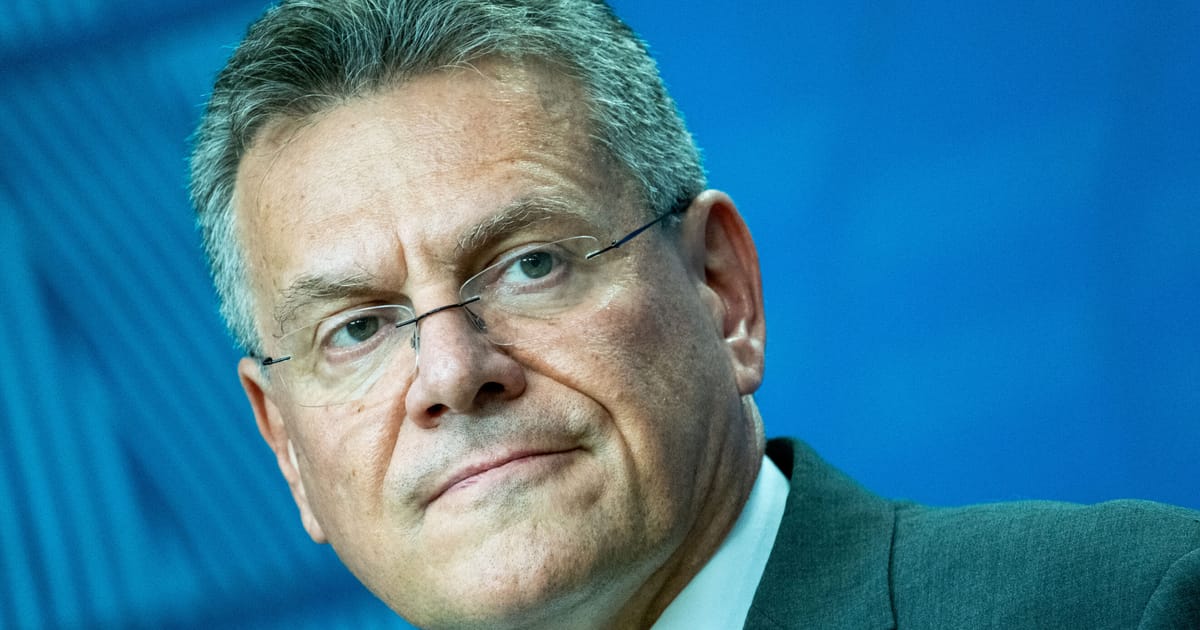
News Competition and Industrial Policy BRUSSELS — The EU and China are in a good place to talk after last week’s trade deal on hybrid cars, but challenges remain, panelists at POLITICO’s European Resilience Summit on Wednesday agreed. “From the Chinese business perspective this is very welcome,” said Linlin Liang of the China Chamber of Commerce to the EU, calling the understanding reached in Beijing “quite balanced from our perspective.” An agreement to halve China's exports hybrid vehicles to Europe was the main deliverable brought home by Trade Commissioner Maroš Šefčovič. The two sides said in a joint statement that they would keep talking about issues such as market access for medical devices and the Foreign Subsidies Regulation, an EU measure that scrutinizes foreign subsidies that distort competition in public procurement and corporate acquisitions. Šefčovič will hold further talks with Chinese Commerce Minister Wang Wentao in January, and they will meet again in March, as he pushes to rein in a €1 billion-a-day bilateral trade deficit.
Liang said Beijing stands ready to act if further talks go off track. “I would like to remind all what MOFCOM mentioned: that they reserve the right to retaliate in case that things ... don’t go around as agreed,” she told the panel on Europe in global trade, referring to the Chinese Ministry of Commerce. Kathleen Van Brempt, a Belgian MEP for the Socialists & Democrats, said the most important outcome of last week’s Beijing talks was that there was “some sort of trade deal or result.” Yet Beijing’s aggressive subsidy policies remain a hurdle, the senior trade lawmaker said, referring to a widely cited OECD study which found that Beijing’s subsidies to industry are up to eight times higher than in other countries: “It’s not normal,” she said.
Liang said that China’s export success should not be attributed solely to subsidies, and was the result of “decades of investment in innovation.” She also said there was “a super appetite” among Chinese businesses to invest in Europe, but that they needed to assess the profitability of the EU market just like European companies. The discussion also revealed differences between policymakers and businesses over the EU’s proposed Industrial Accelerator Act, a flagship measure aimed at steering public procurement spending toward European companies in sectors ranging from renewable energy to steel and the automotive industry. Van Brempt, the S&D group’s lead lawmaker on the file in the trade committee, said the parliament’s three co-leads are aligned on the bill.
While the center-right European People’s Party was “very divided” over the measure, she said lawmakers should be able to come to a common position. The bill’s “Made in Europe” provision is a cause for concern for industry, meanwhile, as it risks isolating the EU from global supply chains. “I would be careful always saying, okay, localize, put fences up,” said Holger Weintritt of German pharmaceutical company Bayer.
“Let’s make sure that we still remain globally connected and look for reliable partnerships instead of isolating ourselves .”
Source: politico.eu